article · 28 October 2026 · 24 min read
Lebanon Facing a Continuing Nightmare
The Humanitarian and Legal Impact of Hostilities and the Economic Crisis on Children and Youth
Contents
Abstract
This article offers an independent legal reading of UNICEF's 2026 report "A Continuing Nightmare" on children and youth in Lebanon. It examines how hostilities and the economic crisis affect the rights to life, health, education, food and protection under international humanitarian law, the Convention on the Rights of the Child and international human rights law. It distinguishes humanitarian documentation from the establishment of legal responsibility, and concludes with practical recommendations on civilian protection, humanitarian access, restoring services, psychosocial support, independent documentation, accountability and reparation.
Lebanon's humanitarian situation shows that the consequences of armed conflict are not limited to direct human losses or to physical damage to homes and civilian facilities. They extend to undermining the fundamental rights of children and youth, including the rights to life, health, education, food, protection from violence, and psychological and social recovery.
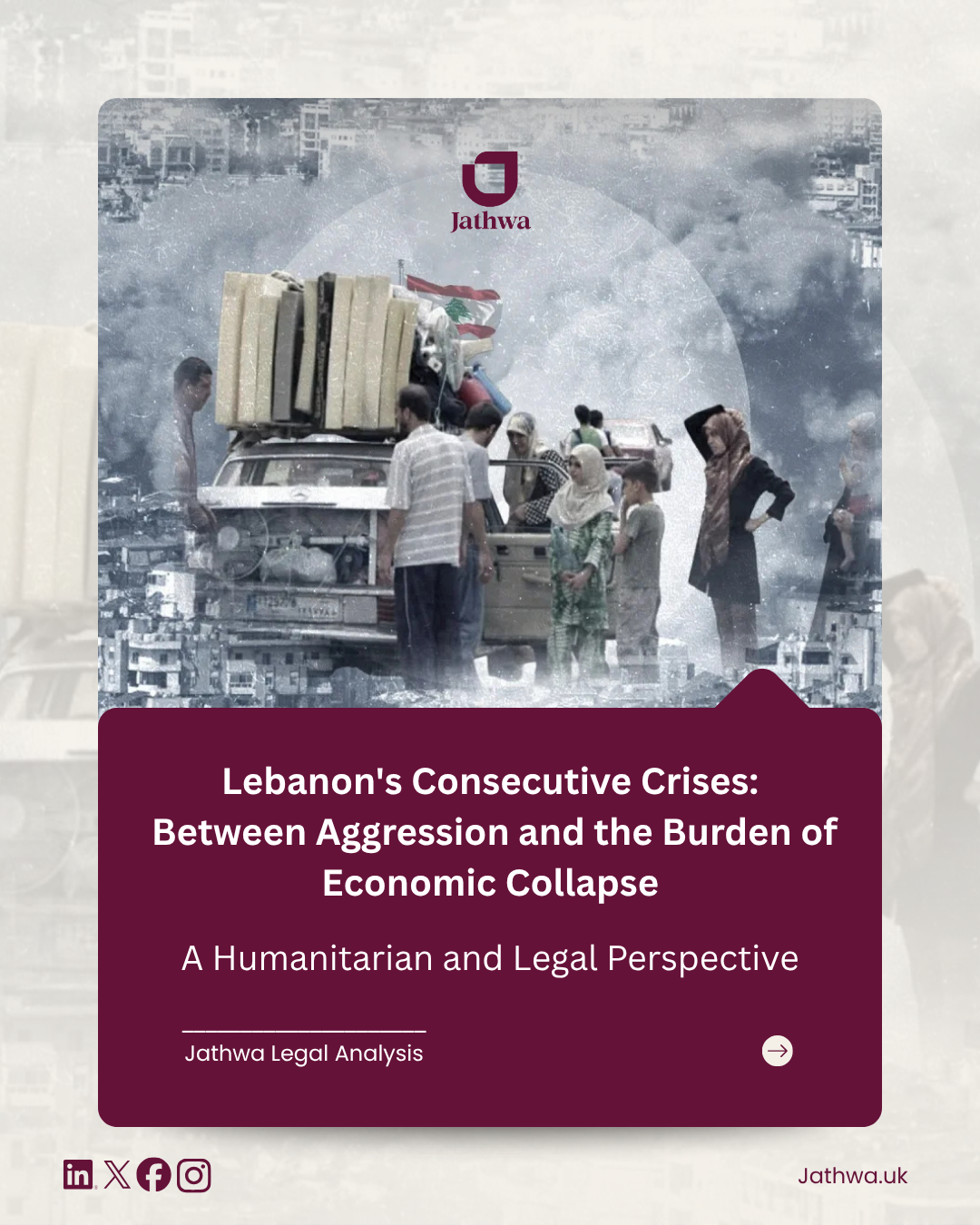
In this context, the report of the United Nations Children's Fund (UNICEF), issued in 2026 under the title "A Continuing Nightmare: Children and Youth in Lebanon Burdened by Hostilities and the Economic Crisis," offers an assessment of the conditions facing these groups as hostilities overlap with a protracted economic and social crisis. The report highlights the cumulative repercussions of the crisis on children, from killing, injury and displacement, through damage to educational and health institutions, to reduced access to basic services and worsening psychological and social pressures.
These findings are particularly significant when analysed in light of international humanitarian law and international human rights law, which impose complementary obligations to protect civilians and children during armed conflict, to limit the harm caused by military operations, to ensure continued enjoyment of fundamental rights, and to take appropriate measures for recovery and rehabilitation.
This article proceeds from a basic premise: assessing the humanitarian situation of children in Lebanon should not be confined to counting losses or identifying urgent needs. It must also analyse the relevant legal obligations, the adequacy of the measures taken to protect children, and the mechanisms needed to investigate suspected violations and ensure accountability where responsibility is established.
The article concludes that an effective response requires combining immediate protection of civilians, guaranteed access for humanitarian aid, restoration of educational and health services, social protection and psychosocial support, stronger independent documentation and investigation, and work toward reparation and long-term recovery.
At the same time, the article stresses the need to distinguish between the humanitarian facts documented in the report and the legal conclusions drawn by this study. Serious harm alone is not sufficient to establish that a particular attack violated international humanitarian law or that an international crime was committed; this requires examining the relevant facts, evidence and legal elements.
The protection of children during armed conflict is a core issue in contemporary international law, given the vulnerability of this group, the specificity of its needs, and the far-reaching consequences that may follow from exposure to violence, displacement, loss of family members, or deprivation of education and health care.
The danger of armed conflict arises not only from the possibility of death or injury, but also from its capacity to undermine the environment a child needs to grow, learn, and receive care and protection. When hostilities coincide with a prolonged economic crisis, the risks multiply, as families may lose the ability to meet basic needs even where some services remain physically available.
In Lebanon, this problem appears in the overlap between the harm caused by hostilities and economic and social crises, placing children and youth before simultaneous challenges relating to personal security, family stability, education, health, nutrition, and social protection.
UNICEF's report "A Continuing Nightmare" comes in this context, as a source for assessing the humanitarian conditions and needs facing children and youth in Lebanon. Its published findings allow examination of the wider repercussions of the crisis and their connection to international legal obligations on the protection of children and civilians.
This article adopts an analytical method that combines documenting the humanitarian context, identifying the relevant legal rules, and analysing their implications, in order to reach practical recommendations addressed to those responsible for protection, humanitarian response, and accountability.
The article does not aim to reproduce the original report or to speak on behalf of UNICEF, but to offer an independent legal reading based on it, with reference to the relevant international instruments and legal sources.
01I. The UNICEF Report and the Humanitarian Context in Lebanon
021. The Multiple Dimensions of the Crisis
The UNICEF report presents a picture of the humanitarian conditions facing children and youth in Lebanon amid continuing hostilities and growing needs resulting from the economic crisis.
The importance of this assessment lies in its treatment of the effects of the crisis as a multidimensional phenomenon rather than a mere series of separate military incidents. Human losses, displacement, damage to homes, schools and health centres, and reduced access to food, treatment and education are all factors that can interact to deepen the vulnerability of children and families.
These repercussions go beyond the stage of immediate danger: losing a home may disrupt family stability, damage to a school may interrupt education, and poverty and high health-care costs may prevent a child from obtaining necessary treatment.
From this standpoint, there is a need for an approach that does not separate protection from hostilities from addressing their social and economic effects, but treats the two as interrelated elements in assessing the humanitarian situation.
032. Human Losses and Injuries
Deaths and injuries among children are among the gravest aspects of the crisis, not only because of the direct impact on victims and their families, but also because of the potential for permanent disability and long-term medical and rehabilitative needs.
The published data associated with the UNICEF report indicate a large scale of human losses among children during the period covered by the assessment. It is also important to view injured children as a group that may need continuous care, including medical treatment, rehabilitation, psychosocial support, and access to education and public services.
The scale of the losses must be understood in light of the period covered by the report, its methodology, and its data sources. The figures in the assessment therefore should not be treated as a final count of all affected children in Lebanon, unless the methodology and scope expressly confirm this.
043. Damage to Education and Basic Services
The report highlights the challenges children face in accessing education, health care, and basic services.
Schools are important not only as places of instruction, but also as environments of stability and social interaction and, in some cases, as access points for support and protection services. Disruption of education may therefore have effects that go beyond lost school days, affecting the child's cognitive, social and psychological development.
Likewise, damage to health facilities, or difficulty reaching them, may delay treatment or interrupt essential services, especially for injured children, children with disabilities, and those who need continuous medical follow-up.
Accordingly, the assessment of humanitarian harm should include identifying direct losses as well as analysing their effects on children's ability to enjoy their fundamental rights during the crisis and after it ends.
054. Economic and Social Pressures
The economic crisis is a multiplier of the risks to which children are exposed, as it may reduce families' ability to secure food, treatment, transport and education, and may increase the risks of school dropout, child labour and exploitation.
This does not mean that every case of economic deprivation automatically constitutes a violation of international law; the assessment requires identifying the applicable obligations, the circumstances that led to the deprivation, and the measures taken to address it.
However, the combination of poverty, displacement and loss of income with the effects of conflict makes it necessary to prioritise interventions that ensure effective access to basic services and prevent the deepening vulnerability of children and families.
06II. The International Legal Framework for the Protection of Children
The protection of children in armed conflict rests on a set of complementary rules, foremost among them international humanitarian law, the Convention on the Rights of the Child, and international human rights law.
Legal analysis requires identifying the rules applicable to the conflict in question, taking into account the status of the parties, the nature of the conflict, and the relevant treaty and customary obligations.
071. The 1989 Convention on the Rights of the Child
The Convention on the Rights of the Child is one of the fundamental instruments governing the protection of children's rights, and it affirms that the child enjoys inherent rights that do not lapse because of the outbreak of armed conflict or the deterioration of economic conditions.
The following articles stand out in this context:
Article 3: provides that the best interests of the child must be a primary consideration in actions and decisions concerning the child.
Article 6: recognises the child's inherent right to life and obliges States Parties to ensure, to the maximum extent possible, the child's survival and development.
Article 19: concerns the protection of the child from all forms of violence, abuse, neglect and maltreatment, within the scope of the obligations set by the Convention.
Article 24: guarantees the child's right to the enjoyment of the highest attainable standard of health and to access to treatment and health-care services.
Article 27: concerns the child's right to a standard of living adequate for the child's physical, mental, spiritual, moral and social development.
Articles 28 and 29: address the right to education and its aims.
Article 38: concerns respect for the rules of international humanitarian law relevant to the child, and taking feasible measures to ensure the child's protection and care during armed conflict.
Article 39: obliges States Parties to take appropriate measures to promote the physical and psychological recovery and social reintegration of child victims of armed conflict, neglect, exploitation and abuse.
These provisions show that protecting the child is not limited to avoiding harm to the child, but also includes taking the measures necessary to ensure the child's survival and development, providing basic services, and promoting recovery and reintegration.
082. International Humanitarian Law
International humanitarian law aims to limit the humanitarian effects of armed conflict by protecting persons who do not take part in hostilities or who have ceased to take part in them, and by imposing restrictions on the means and methods of warfare.
The basic rules relevant to the protection of children include:
A. The principle of distinction
Parties to a conflict must at all times distinguish between civilians and combatants, and between civilian objects and military objectives. Directing attacks against civilians as such is prohibited.
B. The prohibition of indiscriminate attacks
International humanitarian law prohibits attacks that cannot be directed at a specific military objective, or whose effects cannot be limited as the law requires, subject to the relevant legal conditions.
C. The principle of proportionality
It is prohibited to launch an attack that may be expected to cause incidental loss of civilian life, injury to civilians, or damage to civilian objects that would be excessive in relation to the concrete and direct military advantage anticipated.
D. The obligation to take precautions
All practically feasible precautions must be taken to avoid, or at least minimise, harm to civilians, including verifying targets and taking feasible measures to reduce incidental damage.
E. Special protection for children
Children enjoy the general protection afforded to civilians, in addition to special protection reflecting their needs and vulnerability during armed conflict.
Articles 48, 51, 52 and 57 of the 1977 Additional Protocol I regulate a number of these issues, within the limits in which its provisions apply. The International Committee of the Red Cross's study on customary international humanitarian law also contains rules relevant to the protection of civilians and children.
The legal basis applicable to each incident must be determined in light of the nature of the conflict and the applicable treaty and customary rules.
093. Continuing Human Rights Obligations During Conflict
The outbreak of armed conflict does not, in itself, end human rights obligations.
Questions may arise about the relationship between international human rights law and international humanitarian law in armed conflict, but both can contribute to protecting individuals, with regard to the scope of application of each and the nature of the obligation concerned.
For children, it is important to ensure the continuity of health and education services and social protection, and to take the measures necessary to prevent discrimination and provide appropriate support to the most vulnerable groups.
This does not mean that all rights are subject to the same legal regime or that all obligations apply in the same way in every circumstance; the analysis requires identifying the obligation concerned, its legal scope, and the party bound by it.
10III. Analysing Humanitarian Harm in Light of International Obligations
111. Protecting Life and Physical Safety
Human losses among children raise fundamental questions about respect for the rules on the protection of civilians, especially where harm occurs in populated areas or affects facilities on which civilians depend.
International humanitarian law prohibits targeting civilians as such, and also prohibits indiscriminate and disproportionate attacks. These obligations remain in force regardless of the political or military circumstances in which the conflict takes place.
However, determining whether a particular incident constitutes a violation requires an independent examination of the facts, including the nature of the target, the means used, the circumstances surrounding the attack, the expected effects, and the precautions taken.
Therefore, the recording of child casualties is a serious reason for documentation and investigation, but it is not sufficient on its own to determine the lawfulness of an attack or to assign legal responsibility for it.
122. Protecting Schools and the Right to Education
Schools enjoy the protection accorded to civilian objects, unless they become military objectives under the relevant legal conditions. The presence of a military objective near a school does not automatically remove the school's protection, nor does it relieve the parties of their obligations of distinction, proportionality and precautions.
When assessing an incident of damage to a school, consideration should be given to the nature of the use at the time of the attack, the target at which the attack was directed, the information available, the expected damage, and the measures taken to reduce civilian harm.
Alongside these questions concerning the lawfulness of attacks, the responsibility of the relevant authorities to facilitate the continuity of education also stands out. Prolonged disruption of education may deepen inequality, affect children's chances of continuing their studies, and increase the exposure of vulnerable groups to exploitation and child labour.
The response requires providing safe learning spaces wherever possible, rehabilitating damaged schools, supporting teachers and families, and putting in place programmes to address learning loss.
133. Protecting Medical Facilities and Ensuring Access to Treatment
Medical units, medical transport and medical personnel enjoy special protection under international humanitarian law, in accordance with the applicable conditions and provisions.
Any incident involving damage to a health facility must be assessed in light of the nature and use of the facility, the circumstances surrounding the incident, and the rules on special protection, precautions and proportionality.
Protecting the right to health also requires looking at the actual ability to obtain treatment, not merely at the existence of medical facilities.
Treatment costs, interruptions in medicine supply, difficulty of movement, or damage to infrastructure may prevent a child from reaching necessary services. The humanitarian response should therefore include measures to secure urgent treatment, primary care, medicines, nutrition and rehabilitation.
144. Food Security and Social Protection
Declining food security directly affects children's growth, health and ability to learn.
The Convention on the Rights of the Child guarantees rights relating to health, nutrition and an adequate standard of living. Human rights obligations also require appropriate measures to address deprivation and ensure access to basic services, according to the scope of each obligation and the resources and circumstances involved.
Humanitarian interventions must take into account the groups most exposed to deprivation, including children with disabilities, displaced children, children who have lost one or both parents, and families suffering from lack of income or high living costs.
Social protection is not limited to providing urgent assistance; it should also help prevent interruption of education and treatment, reduce the risks of exploitation and child labour, and strengthen families' capacity to recover.
155. Mental Health and Long-Term Recovery
Psychological and social effects are among the aspects that may persist after hostilities subside.
Exposure to constant fear, loss of family members, displacement, or serious injuries may affect a child's psychological and social development, as well as the child's ability to learn, build relationships and feel safe.
Article 39 of the Convention on the Rights of the Child affirms the importance of taking appropriate measures to promote the physical and psychological recovery and social reintegration of children affected by armed conflict.
This requires providing mental health and psychosocial support services suited to the child's age and circumstances, ensuring referral to specialised services when needed, supporting families and caregivers, and integrating mental health into education, protection and humanitarian response programmes.
Reliance on short-term interventions alone should also be avoided, as the needs of some children may continue for long periods and require specialised follow-up.
166. Protecting Girls from Violence and Exploitation
The risks of gender-based violence referred to in the report highlight the importance of adopting preventive and responsive measures that take into account the needs of girls and the most vulnerable children.
These measures include providing safe shelter environments, making specialised health, psychological and social services available, ensuring confidential and safe reporting and referral mechanisms, and protecting victims from stigma and retaliation.
Any allegations of specific incidents must be based on reliable information and appropriate investigations, while ensuring confidentiality, observing the best interests of the child, and not exposing victims or witnesses to additional risks.
17IV. The Relationship Between Conflict and the Economic Crisis
The humanitarian conditions of children and youth in Lebanon cannot be understood by analysing hostilities in isolation from the economic crisis.
Physical damage, displacement and loss of income may coincide with rising costs of food, treatment and education, limiting families' ability to meet their children's needs.
This relationship underscores the importance of a response that combines urgent humanitarian intervention with policies that strengthen social protection and the continuity of services.
181. Obligations Relating to Economic and Social Rights
The Convention on the Rights of the Child contains provisions on health, education and standard of living, and the International Covenant on Economic, Social and Cultural Rights likewise contains provisions on health, education and an adequate standard of living.
The manner in which these obligations are implemented depends on their nature and legal scope, including obligations to take appropriate steps, to use available resources, and to ensure non-discrimination.
In the context of the crisis, the measures taken to ensure access to basic services should be assessed, particularly for children who face financial, geographic or physical barriers to enjoying their rights.
192. Poverty as a Risk Multiplier
Poverty may increase the risks of school dropout, child labour, malnutrition, delayed access to treatment, and exposure to exploitation.
No economic effect, by itself, constitutes evidence of a specific legal violation. However, the accumulation of these effects makes it necessary to assess the adequacy of social protection measures and humanitarian response, and the extent to which they reach those most in need.
This requires providing appropriate assistance to affected families, supporting education, health and nutrition, and taking measures to reduce exploitation and deprivation.
203. The Need to Integrate Relief and Recovery
Humanitarian response is more effective when it combines meeting urgent needs with rebuilding the capacity of families and communities to recover.
This includes repairing essential facilities, restoring educational and health services, supporting livelihoods, providing rehabilitation programmes, and strengthening social protection mechanisms.
It is also necessary that these interventions be designed on the basis of actual needs assessments and reviewed periodically to ensure their effectiveness and their reach to the most vulnerable children.
21V. Documentation, Accountability and Legal Responsibility
Reliable documentation of humanitarian harm is an essential step for understanding the effects of conflict, identifying needs, and supporting protection and response efforts.
However, humanitarian documentation and the determination of legal responsibility serve different functions, although they may complement each other in some cases.
221. From Documenting Harm to Establishing a Violation
Humanitarian reports can provide important information on deaths, injuries, displacement, damage to facilities, and deprivation of services. However, determining whether a specific incident constitutes a violation of international law requires analysing the facts in light of the applicable legal rule.
When assessing a particular attack, it may be necessary to verify the intended target, the circumstances surrounding the attack, the information available at the time the decision was made, the expected civilian effects, and the precautions taken.
A distinction must also be drawn between harm resulting from a particular attack and the cumulative effects of hostilities or of other economic and social factors.
Consequently, a final legal conclusion should not be attributed to a humanitarian report unless the report itself expressly reached it, on a verifiable basis.
232. State Responsibility and Individual Criminal Responsibility
A distinction must be made between the international responsibility of the State and individual criminal responsibility.
State responsibility is examined in light of the rules on attribution of conduct to the State and the existence of a breach of an applicable international obligation, taking into account the relevant legal circumstances.
Individual criminal responsibility, by contrast, requires proof of the material and mental elements of the crime concerned, under the applicable rules of evidence and jurisdiction.
Civilian losses or widespread damage alone are not sufficient to establish a war crime or to determine the criminal responsibility of a particular person. Rather, the elements required for each crime must be proven on the basis of reliable evidence and sound legal procedures.
243. Preserving Evidence and Protecting Victims
Documentation and investigation efforts should take into account the safety of victims and witnesses and the privacy of children.
Appropriate practices include preserving records, images and related information, verifying their sources and dates, documenting the circumstances in which they were collected, and avoiding the publication of data that could reveal children's identities or expose them to danger.
The psychological trauma that victims and witnesses may suffer should also be taken into account, unnecessary repeated interviews should be avoided, and documentation procedures should be carried out in a manner that respects human dignity and the best interests of the child.
254. Reparation and Recovery
Where legal responsibility for a violation is established, it becomes important to determine remedies and reparation under the applicable legal rules.
Appropriate measures may include treatment, rehabilitation, psychological and social support, re-enrolment in education, and measures to restore the rights affected, depending on the nature of the harm, the responsible party, and the competent legal framework.
Recovery is not limited to addressing material damage; it should also include psychological, social and educational needs, and take into account the long-term effects that children may experience.
26VI. Practical and Institutional Recommendations
In light of the humanitarian data presented in the UNICEF report and the legal framework referred to above, this paper recommends the following:
1. Protecting civilians and children
Calling on all parties to the conflict to respect the rules of international humanitarian law, refrain from targeting civilians, and adhere to the principles of distinction, proportionality and precautions, with particular attention to children.
2. Enhancing humanitarian access
Taking the necessary measures to facilitate the delivery of humanitarian aid to affected children and families, in accordance with the applicable rules, and ensuring that distribution is based on actual needs assessments and the principle of non-discrimination.
3. Rehabilitating schools and health facilities
Conducting independent assessments of the damage to educational and health institutions, setting priorities for repair and rehabilitation, and providing safe alternatives that ensure the continuity of education and health care wherever possible.
4. Ensuring access to treatment and nutrition
Expanding health and nutrition services, and providing medicines, treatment and rehabilitation for injured children, with priority for children with disabilities and children at risk of malnutrition.
5. Supporting mental health
Integrating mental health and psychosocial support services into the humanitarian response, and providing sustainable programmes for children, families and caregivers, while ensuring referral to specialised services when needed.
6. Strengthening protection from violence and exploitation
Developing preventive and responsive programmes that are gender- and age-sensitive, ensuring the availability of safe and confidential reporting and referral mechanisms, and strengthening protection services for girls and the most vulnerable children.
7. Strengthening social protection
Supporting families facing severe economic hardship, and providing interventions that reduce the risks of deprivation of food, treatment and education and limit school dropout, child labour and exploitation.
8. Supporting independent documentation and investigation
Strengthening the capacity of the competent bodies to document and verify incidents and harm, preserve evidence professionally, and refer facts that warrant investigation to the competent authorities in accordance with the law.
9. Strengthening accountability
Ensuring independent and effective investigations wherever there are reasonable grounds, and taking appropriate steps to determine responsibility for established violations, with due regard for legal and procedural guarantees.
10. Adopting a child-rights-centred approach
Integrating the principles of the best interests of the child and non-discrimination into the design of humanitarian interventions and recovery and reconstruction programmes, and ensuring that the needs of children with disabilities, displaced children and other most vulnerable groups are taken into account.
11. Strengthening institutional coordination
Supporting cooperation among Lebanese authorities, UN agencies, humanitarian organisations and local institutions, in order to ensure integration between urgent relief, long-term recovery, and the rebuilding of basic services.
12. Monitoring long-term effects
Establishing or strengthening periodic mechanisms for assessing the effects of conflict on children and youth, so that indicators are not limited to deaths and injuries but also include education, health, nutrition, disability, mental health and social protection.
UNICEF's report "A Continuing Nightmare" reveals the multiple dimensions of the crisis experienced by children and youth in Lebanon, where the effects of hostilities overlap with economic and social crises, threatening fundamental rights and weakening prospects for recovery and development.
The legal reading of these findings confirms that protecting children is not limited to preventing their direct targeting, but includes respecting the general rules on the protection of civilians, safeguarding civilian objects, ensuring continued access to basic services, and taking the measures necessary for physical, psychological and social recovery.
The continuation of the economic crisis also makes it necessary to adopt an integrated response linking urgent relief, social protection and the rehabilitation of basic services, with priority given to the most vulnerable children and families.
At the same time, legal professionalism requires separating the documentation of humanitarian harm from the establishment of legal responsibility. Humanitarian reports provide an important basis for understanding the scale of the crisis and identifying needs, but they do not replace the independent investigations needed to determine the lawfulness of acts or to establish specific violations and responsibilities.
Accordingly, efforts to protect children and youth in Lebanon should rest on three complementary tracks: respecting international obligations on the protection of civilians and children; providing a sustainable humanitarian response that guarantees access to basic services; and strengthening documentation, accountability and reparation wherever responsibility is established in accordance with the law.
Protecting children and youth is not merely a temporary humanitarian matter; it is a legal and moral obligation that calls for sustained work placing human dignity and the best interests of the child at the heart of the response. That response is not complete with emergency aid alone, but also requires restoring opportunities for education, health and social protection, addressing psychological effects, ensuring recovery and reintegration, and working to prevent the recurrence of harm.
Get in touch
Citing or republishing our work
For press inquiries, citation requests, or republication permissions, our team welcomes correspondence from scholars, journalists, and aligned organisations.