article · 4 October 2026 · 1 min read
The Looting of Assets and Memory: The Uprooting of Ancient Olive Trees in Southern Lebanon Triggers International Legal Prosecution
By Department of Legal Analysis and Research – Jathwa Center for Training and Legal Studies
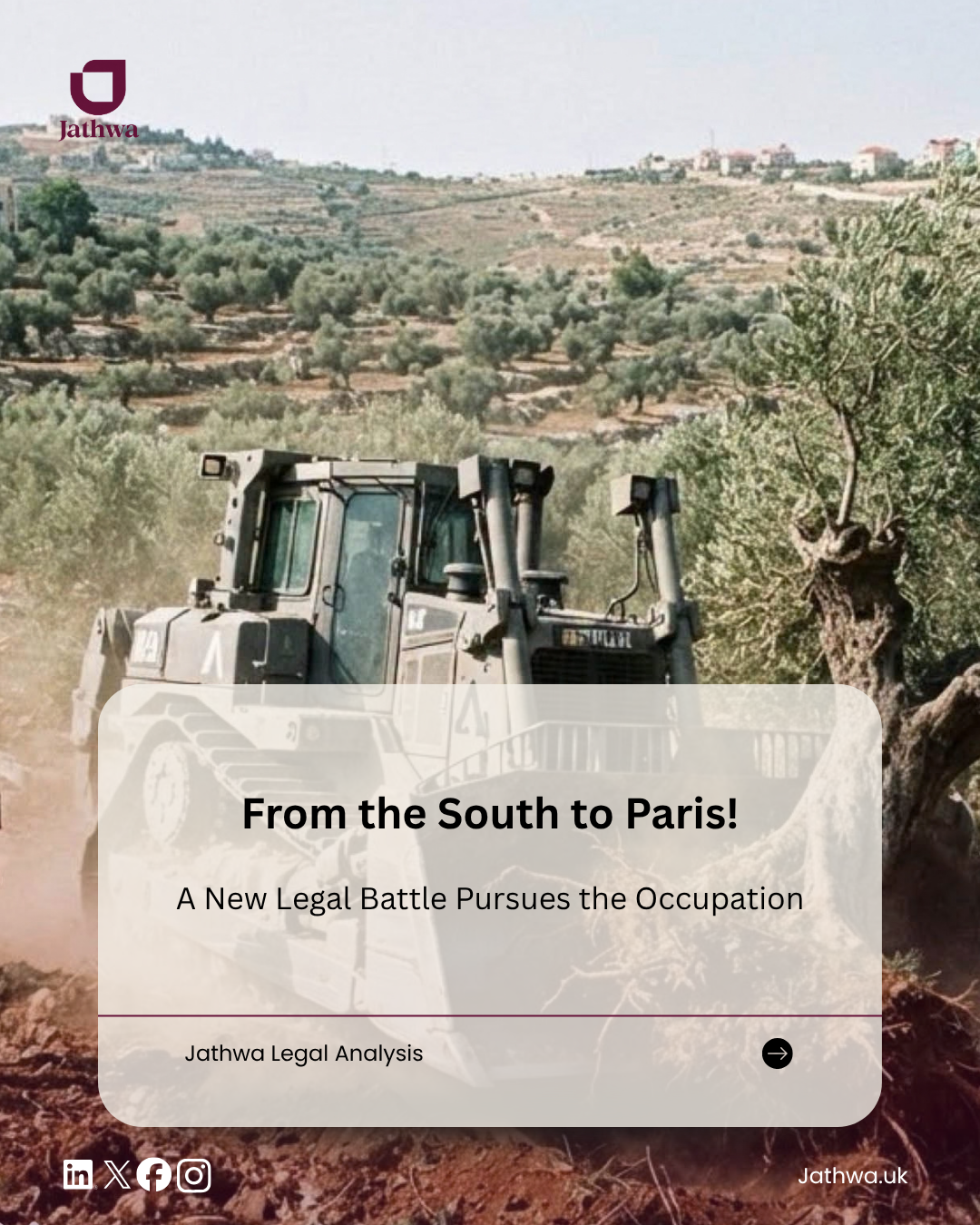
A lawsuit filed in French courts against the Israeli military documents the unlawful uprooting and transfer of over 600 centennial olive trees from Zawtar al-Sharqiyya, raising critical legal accountability issues under international law regarding environmental and civilian property destruction.
A Lebanese citizen holding French nationality has formally lodged a lawsuit before the French judiciary against the Israeli military, accusing it of committing grave violations and destroying private property in the town of Zawtar al-Sharqiyya in Southern Lebanon.
Legal Claims and Documentation:
The legal action documents the uprooting and unlawful transfer of over 600 ancient olive trees—ranging in age between 200 and 500 years and belonging to several families in the municipality—into occupied territory. This judicial step builds upon a series of verified records and video footage documenting systematic bulldozing and physical removal of centennial olive trees across multiple municipalities in the South.
Environmental and Cultural Impact:
From an environmental and cultural heritage perspective, agricultural union estimates indicate that hundreds of thousands of olive trees have been damaged, bulldozed, or uprooted, alongside the destruction of thousands of hectares of arable land and forests.
These practices raise critical legal questions regarding their classification as intentional destruction of the natural environment and civilian property under the rules of International Humanitarian Law, particularly concerning the prohibition of pillage, destruction of private property, and environmental damage under international legal frameworks.
Get in touch
Citing or republishing our work
For press inquiries, citation requests, or republication permissions, our team welcomes correspondence from scholars, journalists, and aligned organisations.