article · 4 November 2026 · 2 min read
Luring, Drugging, and Blackmail: Two Arrested in Beirut Sexual Assault Case
Lebanon’s Internal Security Forces arrested two suspects accused of luring young women via social media and nightclubs, drugging them, sexually assaulting them, and filming them for blackmail and theft.
By Jathwa center for legal and strategic studies and training
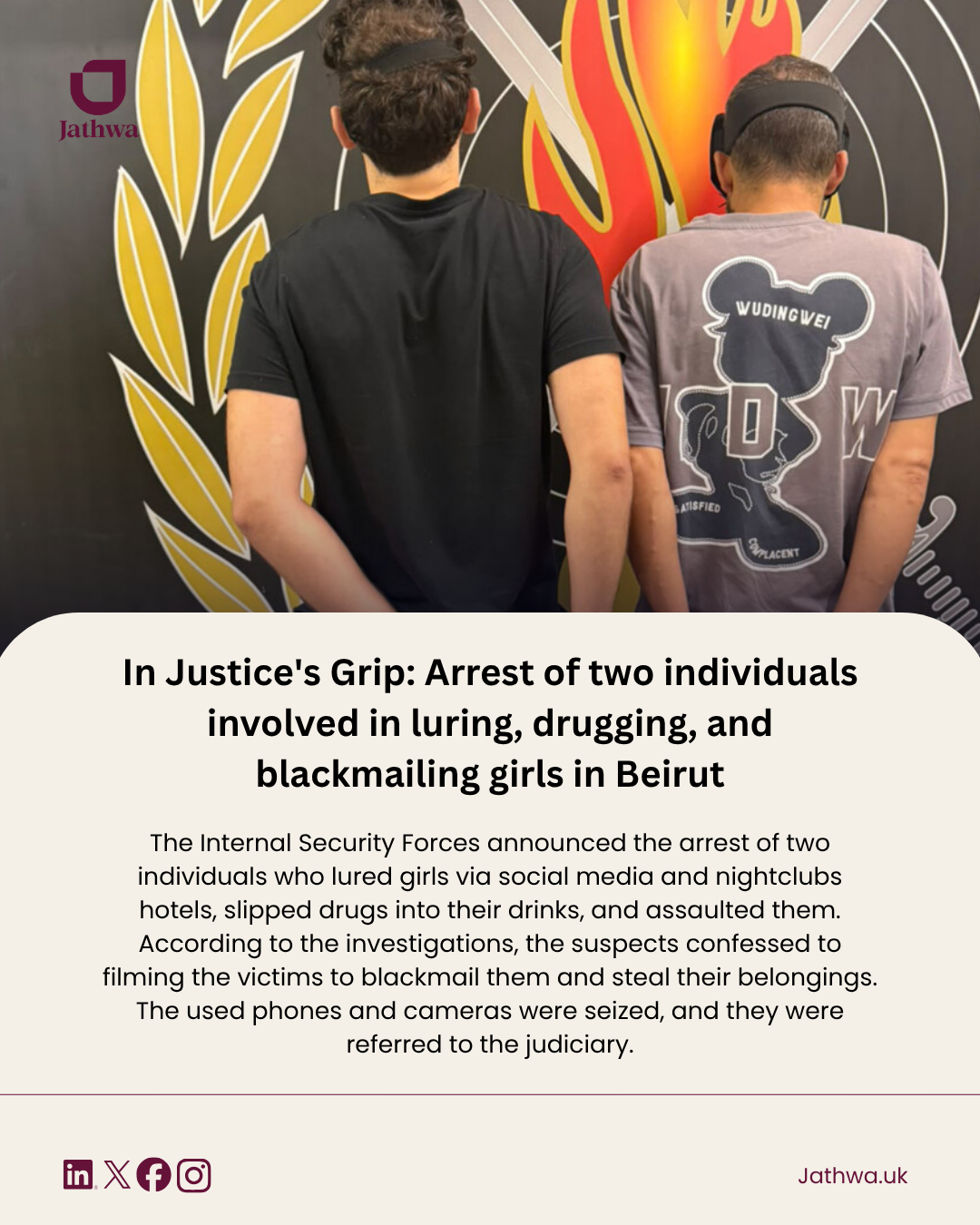
Luring, Drugging, Sexual Assault, and Blackmail: Multiple Crimes Before the Lebanese Judiciary
In a case that exposes the danger of exploiting social media to deceive victims, the Directorate General of the Internal Security Forces announced on 26 October 2026 the arrest of two Lebanese nationals on suspicion of luring young women, drugging them, sexually assaulting them, filming them, and blackmailing them.
According to the ISF statement, the investigation began after a woman filed a complaint alleging that she had been raped in the Hamra area of Beirut. The investigation indicated that the suspects would lure women they had met through social media and in nightclubs, slip narcotic substances into their drinks, and then sexually assault them after they lost consciousness, in hotels in various areas.
The statement added that one of the detainees admitted to filming the victims in order to blackmail them and threaten them into not filing complaints, as well as to stealing their jewelry. A mobile phone containing video clips of the complainant was also seized at his home, along with a camera used for the filming.
The statement noted that the second detainee has prior convictions for facilitating prostitution, and that both detainees were referred, along with the seized items, to the competent authority, upon the instruction of the judiciary.
The publicly reported facts raise suspicion of multiple criminal offenses, most notably:
* Violation of sexual freedom and integrity, depending on the nature of the established acts and under Articles 503 and 504 of the Penal Code.
* Threats made to obtain an unlawful benefit, under Article 650 of the Penal Code, if the elements of the offense of intimidation are met.
* Theft, under Articles 635 and 636 of the Penal Code, taking into account circumstances that may affect the legal characterization.
* Offenses related to filming the victims and using or circulating the recordings, depending on the nature of the content, the established acts, and the applicable legal provisions.
* Offenses related to drugging the victims or administering prohibited substances to them, if the nature of the substances used is established and the necessary legal elements are met.
Individual criminal liability of each detainee, and the extent of each one's involvement in the alleged acts, remain subject to the investigation, the evidence, and the assessment of the competent judiciary.
Protecting victims is not limited to prosecuting the perpetrators; it also includes safeguarding their privacy and dignity and preventing the republication of recordings or any data that could reveal their identities. Reporting a crime is a right, and blackmail does not extinguish that right.
Get in touch
Citing or republishing our work
For press inquiries, citation requests, or republication permissions, our team welcomes correspondence from scholars, journalists, and aligned organisations.